


Estrogen Dominance: Symptoms, Causes and Natural Detox Strategies

A Functional Health Notes–Optimized Guide for Hormonal Balance, Detox, and Root-Cause Healing
What Is Estrogen Dominance?
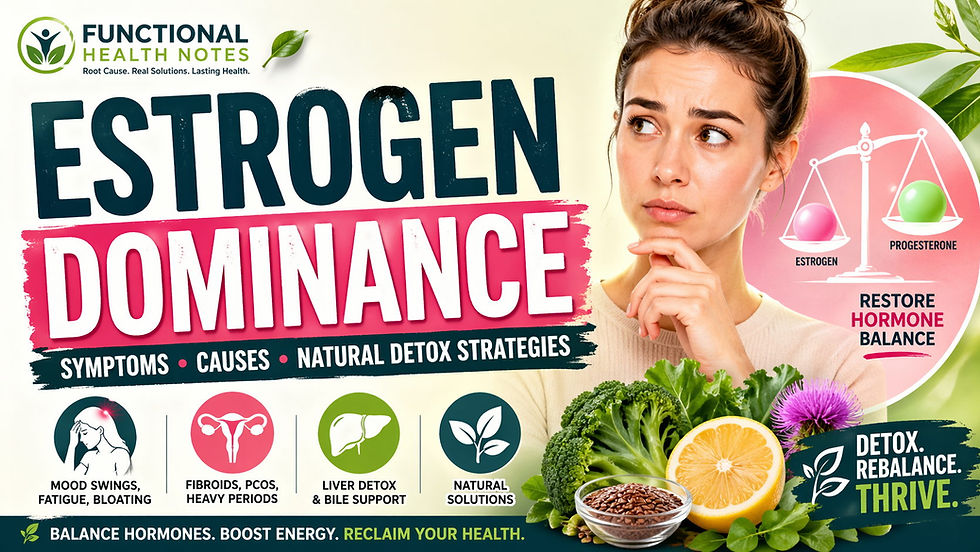
Estrogen dominance is a hormonal imbalance where estrogen levels are too high relative to progesterone (in women) or testosterone (in men), leading to symptoms like weight gain, fatigue, mood changes, and metabolic dysfunction. It is often driven by toxin exposure, poor liver detoxification, gut imbalance, and chronic stress.
Why Estrogen Dominance Is More Common Than Ever
Modern environments have dramatically shifted hormonal balance. From plastics and pesticides to chronic stress and poor diet, your body is constantly exposed to compounds that mimic or amplify estrogen.
This is not just a “women’s issue.”Men are increasingly affected as well—often without realizing it.
The key insight: Estrogen dominance is rarely about estrogen alone—it’s about imbalance, detox capacity, and resilience.
Symptoms of Estrogen Dominance
1. Reproductive & Hormonal Symptoms
In Women:
Heavy or irregular menstrual cycles
Fibroids or PCOS
Breast tenderness and swelling
Infertility or difficulty conceiving
In Men:
Reduced libido
Gynecomastia (breast tissue growth)
Prostate enlargement
Hair loss
2. Metabolic & Weight Changes
Weight gain (especially hips, thighs, lower abdomen)
Insulin resistance
Water retention and bloating
Slowed metabolism or thyroid dysfunction
3. Brain & Mood Effects
Anxiety or depression
Brain fog and poor focus
Migraines
Irritability or mood swings
Estrogen strongly influences neurotransmitters like serotonin and dopamine—so imbalance often feels neurological, not hormonal.
4. Detox & Liver-Related Symptoms
Sluggish digestion
Gallstones or bile congestion
Fatigue after eating
Sensitivity to chemicals or alcohol
These signs often indicate impaired estrogen clearance—not just overproduction.
Root Causes of Estrogen Dominance
1. Xenoestrogens (Environmental Hormone Disruptors)
Modern life exposes you to thousands of synthetic chemicals that mimic estrogen in the body:
BPA (plastics)
Phthalates (personal care products)
Pesticides & herbicides
Synthetic fragrances
These compounds can bind to estrogen receptors and may be far more potent than natural estrogen, overwhelming detox pathways.
2. Poor Liver Detoxification
Your liver is responsible for breaking down estrogen so it can be eliminated.
When detox pathways slow down:
Estrogen accumulates
Bile becomes thick or sluggish
Estrogen gets reabsorbed instead of eliminated
Contributors:
Low fiber diet
Nutrient deficiencies
Alcohol and processed foods
Chronic stress
3. Progesterone Deficiency
Often, estrogen isn’t excessively high—progesterone is too low.
Why this happens:
Chronic stress → cortisol steals progesterone precursors
Perimenopause → natural progesterone decline
Birth control or synthetic hormones
This imbalance creates the appearance of estrogen excess.
4. Gut Dysbiosis (The Estrobolome Connection)
Your gut microbiome regulates estrogen recycling.
An unhealthy gut:
Produces excess beta-glucuronidase
Reactivates estrogen in the intestines
Sends it back into circulation
5. Copper-Zinc Imbalance
Excess copper → stimulates estrogen activity
Low zinc → reduces progesterone production
This imbalance is often overlooked but highly impactful.
Natural Detox & Hormone-Balancing Strategies
1. Support Liver & Bile Flow (Foundation Step)
Focus on improving estrogen metabolism and elimination:
Cruciferous vegetables (broccoli, kale, Brussels sprouts) → provide DIM & sulforaphane
Bitter foods (arugula, dandelion greens) → stimulate bile flow
Lemon water in the morning
Fiber (flaxseeds, chia seeds)→ binds estrogen for elimination
2. Replenish Key Nutrients
These are essential for detox and hormone balance:
Zinc (15–50 mg/day) → supports progesterone, lowers copper
Magnesium → supports stress response & detox
B vitamins → critical for liver detox pathways
Omega-3 fatty acids → reduce inflammation
3. Herbal Support (Evidence-Informed Use)
Vitex (Chasteberry) → supports progesterone production
Milk thistle → liver detox support
Turmeric → anti-inflammatory + detox support
Black cohosh / Dong quai → modulate estrogen activity
4. Reduce Toxin Exposure (High ROI Step)
Small changes = big impact:
Use glass or stainless steel instead of plastic
Choose organic foods when possible
Switch to non-toxic personal care products
Avoid synthetic fragrances
5. Manage Stress (Critical but Overlooked)
Chronic stress directly worsens estrogen dominance.
Support your nervous system with:
Adaptogens (ashwagandha, rhodiola)
Consistent sleep (7–9 hours)
Daily movement
Breathwork or mindfulness
6. Improve Gut Health
Increase fiber intake
Add fermented foods (if tolerated)
Consider probiotics
Reduce processed foods and sugar
7. Advanced Detox Strategies (Optional)
For deeper support:
Infrared sauna (supports toxin elimination)
Dry brushing (lymphatic flow)
Castor oil packs (liver circulation)
8. Functional Testing for Personalization
To truly address root cause:
Estrogen, progesterone levels
Thyroid markers
Liver function
Gut microbiome testing
Long-Term Hormonal Harmony
Estrogen dominance isn’t a permanent condition—it’s a signal.
When you:
Improve detox pathways
Reduce toxic load
Rebuild nutrient status
Support stress resilience
Your body often restores balance naturally.
Estrogen Dominance FAQ
What is estrogen dominance?
Estrogen dominance is a hormonal imbalance where estrogen levels are too high relative to progesterone (in women) or testosterone (in men). This imbalance can disrupt metabolism, mood, and reproductive health—even if estrogen levels appear “normal” on lab tests.
What are the most common symptoms of estrogen dominance?
Common symptoms include:
Weight gain (especially hips, thighs, abdomen)
Heavy or irregular periods
Mood swings, anxiety, or depression
Fatigue and brain fog
Breast tenderness
Low libido
Water retention and bloating
Many people mistake these symptoms for stress or aging.
What causes estrogen dominance?
The most common root causes include:
Xenoestrogens (plastics, pesticides, cosmetics)
Poor liver detoxification (slow estrogen clearance)
Low progesterone (from stress or hormonal shifts)
Gut imbalance (estrogen reabsorption)
High stress and cortisol levels
Can estrogen dominance affect men?
Yes. Men can develop estrogen dominance when estrogen rises relative to testosterone. Symptoms may include:
Reduced libido
Fat gain (especially chest/abdomen)
Gynecomastia (breast tissue growth)
Low energy and motivation
How do you test for estrogen dominance?
Testing options include:
Blood tests (estrogen, progesterone, testosterone)
Saliva hormone testing
DUTCH test (advanced hormone metabolite analysis)
Functional testing often provides deeper insight than standard labs.
How do you fix estrogen dominance naturally?
To reduce estrogen dominance naturally:
Support liver detox (cruciferous vegetables, bitter greens)
Increase fiber intake (flax, chia)
Reduce toxin exposure (plastics, chemicals)
Manage stress (adaptogens, sleep, recovery)
Support gut health (probiotics, whole foods)
What foods help reduce estrogen dominance?
Helpful foods include:
Broccoli, kale, Brussels sprouts (support detox pathways)
Flaxseeds and chia seeds (bind excess estrogen)
Leafy greens (support liver function)
Healthy fats (omega-3s for hormone balance)
What foods should you avoid with estrogen dominance?
Limit:
Processed foods and sugar
Alcohol (impairs liver detox)
Non-organic meats (may contain hormones)
Excess soy (especially processed forms)
Can gut health affect estrogen levels?
Yes. The gut microbiome (called the estrobolome) regulates estrogen recycling.An unhealthy gut can:
Reactivate estrogen
Increase reabsorption
Worsen hormonal imbalance
How does stress contribute to estrogen dominance?
Chronic stress increases cortisol, which:
Reduces progesterone production
Worsens estrogen imbalance
Impairs detox pathways
This is often called the “progesterone steal” effect.
Does estrogen dominance cause weight gain?
Yes. Estrogen dominance can:
Promote fat storage (especially hips/thighs)
Increase insulin resistance
Slow metabolism
Can estrogen dominance cause anxiety or depression?
Yes. Estrogen influences neurotransmitters like serotonin and dopamine. Imbalance can lead to:
Anxiety
Mood swings
Irritability
Brain fog
How long does it take to rebalance estrogen naturally?
It varies, but most people begin noticing improvements within:
4–12 weeks with consistent lifestyle changes
Full hormonal balance may take longer depending on root causes.
Is estrogen dominance reversible?
Yes—estrogen dominance is often reversible.
By addressing root causes like detoxification, nutrition, stress, and toxin exposure, the body can naturally restore balance.
What is the fastest way to reduce estrogen dominance?
The most effective approach combines:
Liver support (diet + nutrients)
Reducing toxin exposure
Improving gut health
Managing stress
There is no single “quick fix”—but layered strategies work best.
Key Takeaways
Estrogen dominance = imbalance, not just “too much estrogen”
Liver, gut, and stress are central drivers
Detox + nutrient repletion = foundational strategy
Small lifestyle changes can significantly reduce hormonal burden
Root-cause approach > symptom suppression
Functional Health Notes Medical Disclaimer
This content is for educational and informational purposes only and is not intended as medical advice, diagnosis, or treatment. Always consult with a qualified healthcare provider before making changes to your diet, supplements, medications, or health routine—especially if you are pregnant, nursing, have a medical condition, or are taking prescription medications. Functional Health Notes content is designed to support—not replace—the relationship between you and your healthcare provider.
REFERENCES:
Books:
"Better Nutrition – May 2015 (USA Edition)"
"Second Spring: Dr. Mao’s Hundreds of Natural Secrets for Women to Revitalize and Regenerate at Any Age" by Dr. Maoshing Ni
"Prescription for Natural Cures: A Self-Care Guide for Treating Health Problems with Natural Remedies" by James F. Balch M.D., Mark Stengler N.M.D. and Robin Young Balch N.D.
"Trends Journal – May 21, 2024"
"Slimming Meals That Heal: Lose Weight Without Dieting, Using Anti-Inflammatory Superfoods" by Julie Daniluk
"Alternative Medicine Guide to Women’s Health 2" by Burton Goldberg
"Getting Clear: Everything You Need to Know to Cure Your Acne Quickly, Easily and Naturally" by Jennifer Swink
"Hormone Replacement: The Real Truth" by Sandra Cabot
"Beyond the Pill: A Revolutionary Program for Hormone Balance, Reversing the Side Effects of Contraception, and Reclaiming Your Health" by Jolene Brighten


