


Healing the Gut: The 5R Framework Explained

A Science-Backed, Functional Approach to Restoring Gut Health, Reducing Inflammation, and Supporting Whole-Body Wellness
Introduction: Why Gut Health Is the Foundation of Everything
The gut is far more than a digestive organ—it’s a central control system influencing immunity, metabolism, hormones, and even brain function. Emerging research shows that gut dysbiosis (microbial imbalance) and intestinal permeability (“leaky gut”) are root contributors to chronic inflammation, autoimmune conditions, fatigue, and mood disorders.
If you’ve ever felt “off” despite normal lab results, your gut may be the missing link.
The 5R Framework—Remove, Replace, Reinoculate, Repair, Rebalance—offers a structured, root-cause approach to restoring gut health naturally and sustainably. Instead of masking symptoms, this framework targets the underlying dysfunction driving systemic health issues.
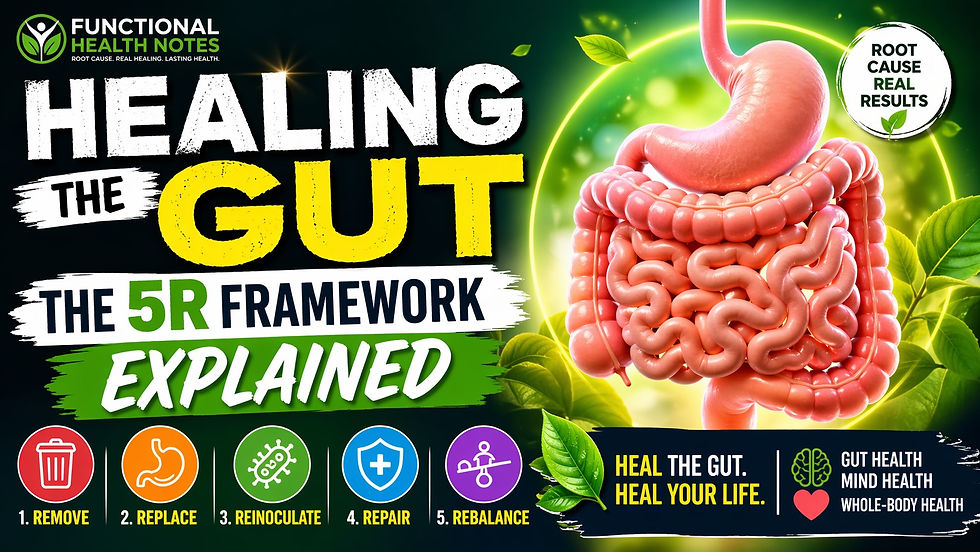
What Is the 5R Framework for Gut Healing?
The 5R Protocol is a step-by-step functional medicine strategy designed to:
Eliminate gut disruptors
Restore digestive function
Rebuild beneficial bacteria
Heal the gut lining
Support long-term resilience
This approach aligns with modern research on the gut-brain axis, immune signaling, and microbiome diversity.
Step 1: Remove — Eliminate Gut Irritants & Hidden Triggers
Why It Matters
You can’t heal the gut while constantly irritating it. The first step is identifying and removing factors that damage the microbiome and gut lining.
Common Gut Disruptors
1. Inflammatory Foods
Gluten (gliadin → zonulin → increased permeability)
Lectins (bind to gut lining → inflammation)
Processed foods & refined sugars (feed harmful bacteria)
2. Medications
Antibiotics (wipe out beneficial bacteria)
NSAIDs (damage gut lining)
PPIs (reduce stomach acid → bacterial overgrowth)
3. Environmental Toxins
Glyphosate (disrupts microbiome balance)
Heavy metals (damage gut cells)
BPA & endocrine disruptors
Actionable Takeaways
Start a 2–4 week elimination diet
Remove ultra-processed foods
Prioritize organic, whole foods
Review medications with a healthcare provider
Step 2: Replace — Restore Digestive Function
Why It Matters
Poor digestion leads to malabsorption, bloating, and microbial imbalance. Many people have low stomach acid and insufficient enzymes—especially under stress.
Key Strategies
Digestive Support
Betaine HCl → improves protein digestion
Digestive enzymes → break down fats, carbs, proteins
Bitter herbs (dandelion, gentian) → stimulate bile flow
Simple Natural Boosters
Apple cider vinegar before meals
Ginger for motility
Chewing food thoroughly (often overlooked, highly effective)
Actionable Takeaways
Add digestive support gradually
Focus on mindful eating + slower meals
Address chronic stress (a major cause of low stomach acid)
Step 3: Reinoculate — Rebuild the Microbiome
Why It Matters
A diverse microbiome protects against inflammation, regulates immunity, and supports metabolism.
How to Restore Beneficial Bacteria
Probiotic Foods
Sauerkraut
Kimchi
Kefir
Yogurt (if tolerated)
These introduce beneficial strains like Lactobacillus and Bifidobacterium.
Prebiotic Foods (Feed Good Bacteria)
Garlic, onions
Jicama
Chicory root
Green bananas
These support bacteria like Akkermansia, linked to metabolic and gut health.
Advanced Insight
Research shows that microbiome restoration can influence immune responses—similar to what’s observed in therapies like fecal microbiota transplantation (FMT), highlighting how critical microbial balance is.
Actionable Takeaways
Add 1–2 fermented foods daily
Increase fiber slowly to avoid bloating
Rotate plant foods for diversity
Step 4: Repair — Heal the Gut Lining
Why It Matters
A damaged gut lining allows toxins and undigested particles into the bloodstream, triggering inflammation and immune reactions.
Key Nutrients for Gut Repair
L-Glutamine → fuels intestinal cell regeneration
Bone broth (collagen + gelatin) → strengthens gut lining
Omega-3 fatty acids → reduce inflammation
Zinc → supports barrier repair
Aloe vera & slippery elm → soothe irritation
Scientific Insight
Nutrients like zinc and glutamine have been shown to improve intestinal barrier integrity and reduce inflammation, reinforcing their role in gut repair.
Actionable Takeaways
Add a daily gut-repair stack (food first, supplements second)
Focus on anti-inflammatory whole foods
Stay consistent—repair takes time
Step 5: Rebalance — Sustain Long-Term Gut Health
Why It Matters
Gut healing isn’t a quick fix—it’s a lifestyle shift.
Core Pillars of Rebalancing
1. Dietary Diversity
Aim for 30+ plant foods per week
Improves microbial diversity and resilience
2. Stress Management
Chronic stress → elevated cortisol → increased gut permeability
Try:
Breathwork
Meditation
Walking
3. Sleep Optimization
Poor sleep disrupts gut bacteria
Aim for 7–9 hours nightly
4. Reduce Toxic Load
Filter water
Choose clean personal care products
Limit pesticide exposure
Actionable Takeaways
Build sustainable habits (not perfection)
Prioritize consistency over intensity
The Gut–Brain Connection: Why This Matters More Than You Think
Your gut and brain communicate constantly through the gut-brain axis.
When your gut is inflamed:
Mood declines
Brain fog increases
Stress tolerance drops
When your gut is balanced:
Mental clarity improves
Energy stabilizes
Emotional resilience increases
How Long Does the 5R Gut Healing Process Take?
Mild issues: 4–8 weeks
Moderate dysfunction: 2–3 months
Chronic conditions: 3–6+ months
Consistency is the key driver of results.
Healing the Gut: The 5R Framework Explained (FAQ)
What is the 5R framework for gut healing?
The 5R framework is a functional medicine approach to gut health that stands for Remove, Replace, Reinoculate, Repair, and Rebalance. It targets root causes of gut dysfunction—like dysbiosis, inflammation, and leaky gut—by eliminating irritants, restoring digestion, rebuilding beneficial bacteria, healing the gut lining, and optimizing lifestyle habits for long-term health.

How does the 5R protocol heal leaky gut?
The 5R protocol helps heal leaky gut (intestinal permeability) by:
Removing inflammatory triggers like gluten and processed foods
Replacing digestive enzymes and stomach acid
Reinoculating beneficial gut bacteria
Repairing the gut lining with nutrients like L-glutamine and zinc
Rebalancing stress, sleep, and diet
This structured approach restores the gut barrier and reduces systemic inflammation.
What are the 5 steps to heal your gut naturally?
The five steps to heal your gut naturally are:
Remove harmful foods, toxins, and pathogens
Replace digestive enzymes and stomach acid
Reinoculate with probiotics and prebiotics
Repair the gut lining with key nutrients
Rebalance lifestyle factors like stress, sleep, and diet
How long does it take to heal the gut with the 5R framework?
Gut healing timelines vary depending on severity:
Mild gut issues: 4–8 weeks
Moderate imbalance: 2–3 months
Chronic conditions: 3–6+ months
Consistency with diet, lifestyle, and supplementation is key for lasting results.
What foods help repair the gut lining?
Foods that support gut repair include:
Bone broth (collagen and gelatin)
Fermented foods (kimchi, sauerkraut, kefir)
Omega-3-rich foods (salmon, chia seeds)
Prebiotic fibers (garlic, onions, chicory root)
Anti-inflammatory foods (berries, leafy greens)
These help reduce inflammation and support intestinal cell regeneration.
What causes gut dysbiosis and leaky gut?
Common causes include:
Processed foods and high sugar intake
Antibiotics and medications (NSAIDs, PPIs)
Chronic stress and poor sleep
Environmental toxins (glyphosate, heavy metals)
Low fiber intake and lack of dietary diversity
These disrupt the gut microbiome and weaken the intestinal barrier.
Can gut health affect mental health and brain function?
Yes. The gut-brain axis connects your digestive system and brain. Poor gut health can contribute to:
Brain fog
Anxiety and mood imbalances
Fatigue and low motivation
A healthy gut supports neurotransmitter production and emotional stability.
Do probiotics alone fix gut health?
No. While probiotics help, they are only one part of the solution. True gut healing requires:
Removing root causes
Supporting digestion
Repairing the gut lining
Improving lifestyle factors
The 5R framework addresses all these areas for lasting results.
What is the best probiotic for gut healing?
The best probiotics for gut health often include strains like:
Lactobacillus (supports digestion and immunity)
Bifidobacterium (reduces inflammation)
Soil-based probiotics (e.g., Bacillus species)
However, effectiveness depends on individual gut conditions and overall protocol.
How do I know if my gut is unhealthy?
Common signs of poor gut health include:
Bloating, gas, or digestive discomfort
Food sensitivities
Fatigue or brain fog
Skin issues (acne, eczema)
Frequent illness or weakened immunity
These symptoms often indicate imbalance in the gut microbiome.
What is the fastest way to improve gut health?
The fastest way to improve gut health is to:
Remove processed foods and sugar
Add fermented foods and fiber
Improve sleep and reduce stress
Support digestion with enzymes or bitters
Even small changes can quickly improve gut function and symptoms.
Can you heal your gut without supplements?
Yes, many people can improve gut health through:
Whole, nutrient-dense foods
Fermented foods and prebiotics
Stress management and sleep optimization
Supplements can accelerate healing but are not always required.
Is the 5R framework safe for everyone?
The 5R framework is generally safe when personalized, but individuals with medical conditions should consult a healthcare provider—especially when using supplements or making major dietary changes.
Final Thoughts: A Root-Cause Path to Lasting Health
The 5R Framework is not just a gut protocol—it’s a system-wide reset.
By following this structured approach, you can:
Reduce inflammation
Improve digestion
Support immunity
Enhance mental clarity
Restore long-term resilience
The gut truly is the foundation of health—and when you heal it, everything else starts to improve.
Action Plan: Start Healing Your Gut Today
Simple 7-Day Kickstart:
Remove processed foods + sugar
Add 1 fermented food daily
Drink bone broth or collagen
Prioritize sleep + hydration
Practice daily stress reduction
Functional Health Notes Medical Disclaimer
This content is for educational and informational purposes only and is not intended as medical advice, diagnosis, or treatment. Always consult with a qualified healthcare provider before making changes to your diet, supplements, medications, or lifestyle—especially if you have a medical condition or are taking prescription medications. Functional Health Notes does not replace professional medical guidance.
REFERENCES:
Books:
"The Stem Cell Activation Diet: Your Complete Nutritional Guide to Fight Disease, Support Brain Health, and Slow the Effects of Aging" by Dana M. Elia
"The Clever Gut Diet: How to Revolutionize Your Body from the Inside Out" by Dr. Mosley Michael
"Heal Hashimoto’s: Start with the Gut" by Dr. Sharon Lee Rasa
"Fat Loss Revolution: 12 Weeks to a Hot ‘n Healthy Body at Any Age" by Paula Owens
"The Complete Leaky Gut Health and Diet Guide: Improve Everything from Autoimmune Conditions to Eczema by Healing Your Gut" by Dr. Makoto Trotter & Doug Cook
"The Thyroid Connection: Why You Feel Tired, Brain-Fogged, and Overweight—and How to Get Your Life Back" by Amy Myers
"Meals That Heal Inflammation: Embrace Healthy Living and Eliminate Pain, One Meal at a Time" by Julie Daniluk
"The Autoimmune Solution: Prevent and Reverse the Full Spectrum of Inflammatory Symptoms and Diseases" by Amy Myers, M.D.


