


Probiotics vs Prebiotics: What’s the Difference and Why It Matters for Gut Health

Updated: May 1
Your gut isn’t just about digestion—it’s a complex ecosystem that influences your immune system, metabolism, brain health, and even chronic disease risk.
If you’ve ever searched “how to improve gut health naturally”, you’ve likely seen two terms over and over: probiotics and prebiotics.
But here’s the truth most people miss:
👉 They are not the same—and understanding the difference can completely change your results.
What Is the Gut Microbiome (And Why It Matters)
The gut microbiome consists of trillions of bacteria, fungi, and microbes living in your digestive tract.
These microbes help:
Break down food
Produce essential nutrients
Regulate inflammation
Support immune function
Influence mood through the gut-brain axis
When your microbiome is balanced, you feel energized and resilient.When it’s not? You may experience:
Bloating
Fatigue
Brain fog
Skin issues
Chronic inflammation
Probiotics vs Prebiotics: The Core Difference
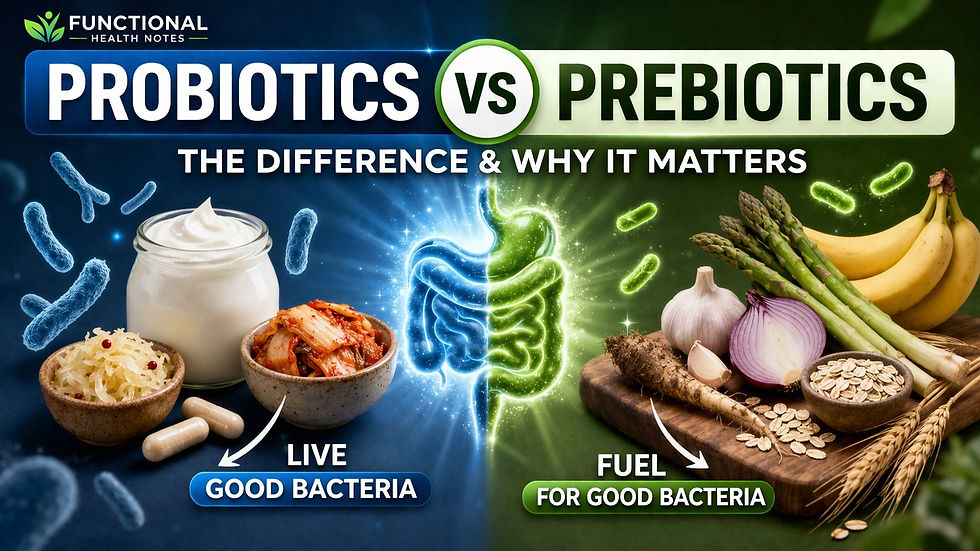
Probiotics = The “Good Bacteria”
Probiotics are live beneficial microorganisms that you consume.
They help by:
Restoring microbial balance
Fighting harmful bacteria
Supporting gut lining integrity
Common probiotic strains include:
Lactobacillus
Bifidobacterium
Saccharomyces boulardii
Top probiotic foods:
Yogurt
Kefir
Sauerkraut
Kimchi
👉 Think of probiotics as adding new workers to your gut ecosystem.
Prebiotics = The “Fuel” for Good Bacteria
Prebiotics are non-digestible fibers that feed beneficial bacteria already living in your gut.
They help by:
Stimulating growth of good bacteria
Increasing short-chain fatty acids (SCFAs)
Reducing inflammation
Improving mineral absorption
Common prebiotic compounds:
Inulin
Resistant starch
Fructo-oligosaccharides (FOS)
Top prebiotic foods:
Garlic
Onions
Asparagus
Bananas
Chicory root
Whole grains
👉 Think of prebiotics as fertilizer for your gut garden.
How Probiotics and Prebiotics Work (The Science Simplified)
Probiotics: Direct Action
Probiotics work immediately by:
Competing with harmful bacteria
Producing antimicrobial compounds
Supporting immune responses
They can help with:
Antibiotic-associated diarrhea
IBS symptoms
Gut infections
Prebiotics: Indirect but Powerful
Prebiotics work more gradually by:
Feeding beneficial microbes
Increasing SCFA production (like butyrate)
Strengthening the gut barrier
This leads to:
Reduced inflammation
Better metabolic health
Improved gut lining integrity
Why You Actually Need BOTH (The Synbiotic Effect)
Here’s where most people go wrong:
👉 They focus only on probiotics… and ignore prebiotics.
But without fuel, probiotics don’t thrive.
The Best Approach = Synbiotics
Synbiotics = Probiotics + Prebiotics working together
Examples:
Yogurt + banana
Kefir + oats
Sauerkraut + garlic
Benefits include:
Better probiotic survival
Increased SCFA (short-chain fatty acids) production
Enhanced gut healing
Proven Health Benefits (Backed by Research)
Benefits of Probiotics
Improve digestive disorders (IBS, diarrhea)
Support immune system balance
Reduce anxiety via the gut-brain axis
Help restore microbiome after illness
Benefits of Prebiotics
Improve insulin sensitivity
Support weight and metabolic health
Enhance calcium absorption (bone health)
Reduce inflammation
How to Choose the Right Option for You
When to Use Probiotics
After antibiotics
Digestive imbalance or infections
Short-term gut support
✔ Tip: Choose strain-specific probiotics for targeted benefits
When to Use Prebiotics
Long-term gut health maintenance
Improving microbiome diversity
Supporting metabolism
✔ Tip: Start slow (5–10g/day) to avoid bloating
Common Mistakes to Avoid
❌ Taking probiotics without prebiotics
❌ Using high doses too quickly
❌ Ignoring individual gut sensitivity (especially with IBS or SIBO)
❌ Relying only on supplements instead of whole foods
The Future of Gut Health (What’s Coming Next)
Emerging trends include:
Personalized microbiome testing
Precision probiotics tailored to your DNA
Advanced synbiotic formulations
This is where functional health is heading—personalized, root-cause healing.
Actionable Takeaways (Quick Summary)
Probiotics = live bacteria
Prebiotics = food for those bacteria
You need BOTH for optimal gut health
Whole foods should be your foundation
Start slow and personalize your approach
Probiotics vs Prebiotics: FAQ
What is the difference between probiotics and prebiotics?
Probiotics are live beneficial bacteria, while prebiotics are non-digestible fibers that feed those bacteria. Probiotics add healthy microbes to your gut, whereas prebiotics help existing good bacteria grow and thrive. Both are essential for maintaining a balanced gut microbiome and overall health.

Which is better: probiotics or prebiotics?
Neither is better—they work best together. Probiotics introduce beneficial bacteria, while prebiotics support their growth. Combining both (called synbiotics) provides the most effective support for gut health, digestion, and immunity.
Do I need both probiotics and prebiotics for gut health?
Yes. For optimal gut health, you need both:
Probiotics to replenish beneficial bacteria
Prebiotics to nourish and sustain them
Without prebiotics, probiotics may not survive or function effectively.
What foods are high in probiotics and prebiotics?
Probiotic foods:
Yogurt
Kefir
Kimchi
Sauerkraut
Prebiotic foods:
Garlic
Onions
Bananas
Asparagus
Oats
Eating a combination of both supports a healthier gut microbiome.
Can you take probiotics and prebiotics together?
Yes, and it’s recommended. Taking them together creates a synbiotic effect, meaning the prebiotics help probiotics survive and multiply, improving their overall effectiveness.
When should you take probiotics vs prebiotics?
Probiotics: Often taken after antibiotics or during digestive issues
Prebiotics: Best used daily for long-term gut support
For best results, many people benefit from taking both consistently.
Do probiotics help with bloating and digestion?
Yes, certain probiotic strains can help reduce bloating, improve digestion, and restore gut balance. However, results vary depending on the strain and individual gut health.
Can prebiotics cause bloating or gas?
Yes, especially when first introduced. Prebiotics are fermented by gut bacteria, which can produce gas. Start with small amounts (5–10g/day) and increase gradually to improve tolerance.
Are probiotics or prebiotics better for IBS?
It depends on the individual:
Some people with IBS benefit from specific probiotic strains
Others may need low-FODMAP prebiotics to avoid symptoms
Personalization is key for digestive conditions.
What are synbiotics and why do they matter?
Synbiotics are a combination of probiotics and prebiotics designed to work together. They enhance gut health more effectively by improving bacterial survival, colonization, and activity in the digestive system.
How long does it take for probiotics and prebiotics to work?
Probiotics: May show effects within a few days to weeks
Prebiotics: Typically take longer (weeks) to improve microbiome balance
Consistency is essential for lasting results.
What’s the best way to improve gut health naturally?
The most effective approach includes:
Eating fiber-rich prebiotic foods
Consuming fermented probiotic foods
Reducing ultra-processed foods
Managing stress and sleep
A combined lifestyle approach supports long-term gut health.
Final Thoughts: Why This Matters More Than You Think
Your gut health influences nearly every system in your body—from energy and metabolism to mental clarity and immune strength.
Understanding the difference between probiotics vs prebiotics isn’t just nutrition knowledge…
👉 It’s a foundational step toward long-term health optimization.
Functional Health Notes Medical Disclaimer
This content is for informational and educational purposes only and is not intended as medical advice, diagnosis, or treatment. Always consult a qualified healthcare professional before making changes to your diet, supplement routine, or health practices—especially if you have a medical condition, are pregnant, or are taking medications. The information provided reflects a functional health perspective and should not replace personalized medical guidance.
REFERENCES:
Books:
by Will Bulsiewicz MD
by Marianne Teitelbaum and Anjali Grover
"Healing the Thyroid Naturally: Healing Your Thyroid Naturally with Ayurveda" by Dr. Ajay Kumar
"Successful Aging: A Neuroscientist Explores the Power and Potential of Our Lives" by Daniel Levitin
"M360 Clinical Fitness: Metabolic Fitness for Life" by Tim Barnes
"Academy of Nutrition and Dietetics Complete Food and Nutrition Guide" by Roberta Larson Duyff
"Dr. Colberts Healthy Gut Zone" by Don Colbert MD
"ABC of Nutrition (ABC Series) 5th Edition" by Wilma Leslie (Editor), Catherine Hankey (Editor) and Mike Lean (Editor)
by Mascha Davis, MPH, RDN


